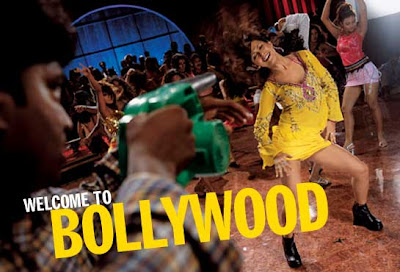
I think the Indian Cinematic Experience (or, the Experience) is skewed in principle. Or what's left of it, anyway. If the hallowed,musty, mildewy interior of a Prithvi can be likened to a Miles Davis concert, then the Experience can be, for all I know, a Miley Cyrus musical. Anyway, I'm getting ahead of myself. Every time I guffaw at some grammatical flaw in Rakhi Sawants English or at Kashmira Shahs lack of tact, I feel something is amiss. Why does the industry spawn thousands of crass starlets and wannabe actors every year, and then discard them - or rather, distance themselves from them - in some, nation-wide pogrom reminiscent of the bubonic plague? The beautiful thing about us humans is that we can draw from our hypocrisy, as and when we see fit. That alone makes the Experience worthwhile.
Many of these aspiring actors come from the humblest of financial backgrounds. You can see their mothers swabbing floors in high-rise buildings and their fathers drinking - or moonshining - in peeling-paint chawls, while the eyes of their siblings are staring listlessly into celluloid fantasy. In spite of all the accusations the tabloids chuck at them on a daily basis, one should not forget that these people are not so much as potential thinkers, as they are performers. You can't expect them to be all aquiline and laid-back, because that's not the function society wants them to carry out. They are entertainers. They are marionettes. So, while they straighten their ties and smoothen out any snags in their frilly dresses, let them be. You haven't given them enough to work with, stay off their case. They come from the slums, you want them to shake a leg and expose their collective cleavage, and then you want them to be aesthetically articulate, too? Well, that's just not done.
Because you can't lay to rest these little inconsistencies of thought. You have to go through a certain lane of influences, and only then will you land up in a place where you can perpetrate puns and throw around articulate witticisms like nobodys business. When you trace these individuals to their backgrounds, and the tremendous cultural inequities they've faced (unlike many of us), you can't help feeling sorry for them. The creativity a producer espouses, the creativity a director envisions, the creativity a cinematographer enjoys - they are all markedly different from the creativity the performer chooses to show. His limbs are his property, and he chooses to make do with what he has, to let cinema-goers have the time of their lives as they pop their popcorn. When you see a Shah Rukh or an Aamir, you fail to see that their ability to make the nation hold it's collective breath has stemmed from a single, repeated stimulus - they learnt through trial-and-error what makes Indian audiences happy (i.e. the sights they want to see, the sounds they want to hear, even the people that they would like to see as their favourite actors' arm candy). So much so that a vast portion of a celebrity's life is public. They can't even trim the unwanted facets of their life at length because the critics start questioning the motives that led to the trimming. So, be judicious in your judging of the nautanki.

It's an evoulutionary imperative. Now, as for whether this thought process follows positive or negative evolution, I cannot say. What the film fraternity deems as an useless appendage, it will discard. No one can say whether the discarding was appropriate, given the shifting focus from artistic endeavour to commercial profit. There will be subdivisions in cinema. There will be always be commercial and arthouse cinema. It's upto the audiences to pick one variant and stay connected with that cinematic code. Or follow the worthier nuances of both. The pervasiveness of Bollywood in the Indian cultural ethos is commendable. There are computer-generated vinyl movie-posters plastered over 'stick-no-bills' walls and the product endorsements dot the faces of many a tea-stall and barbershop across India. It is an ubiquitous aspect of our daily life. It permeates everything - from haute couture to popular music, from talk shows to billboard adverts.
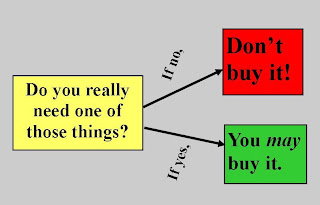
It is more a study in economics than a study in visual aesthetics. The law of commodities - You agree with a product's reliability, you stick to it. The value we associate with a product reflects on our choice to cherish it. This is a necessary catharsis. Film pundits may tut-tut at the lack of brevity in the dialogues, but you can't ignore the buying power that is being credited to Bollywood through the churning out of a thousand films a year. Moreover, soapbox feminism is on the rise, what with the disillusioned stay-at-home mom finding her feet in the chauvinistic quagmire that is urban India. Now, this is where I draw a complete blank. I am seeing my feminine counterparts swoon over articles of clothing that grace the shoulders of the leading ladies on celluloid, I am seeing them speaking in hushed tones about weepy sob-sisters and I am at a loss. Some of our films subtly insult the collective consciousness. So much so that to a vast majority of the Indian middle-class, the insult goes ignored. It is just another cliche to them. Maybe, it is symptomatic of the wider rift between consumerism and minimalism, or of the integration of a more culturally-endowed India to Western demographics. Only time will tell. Till then, lets sit back in our swivel chairs and enjoy the show.


 The cigarette dangles from my mouth like nobody's business. We are sitting on a quiet curb near Colaba Causeway. Mohsinbhai is dishing out faloodas laced with saffron. Michellia is tugging at her shirtfront absent-mindedly with one hand, and waving the other at Mohsinbhai to get us another cream-crumpet. Out of the corner of my eye, I observe the slow undulations of her breasts, as she motions to Mohsinbhai to refill her glass. I look away hastily, fearing reproval. To our left, a 'secondhand-book-seller' is plying his trade without his usual chirpiness (that is an occupational hazard here). As she digs into her backpack to retrieve her Nikon,I look around for a suitable place to stub out the cigarette. There is a tinkle of glasses and cutlery, as I reach for change in the pockets of my jeans, and Mohsinbhai's face is gleaming as pockets the change, stowing the spoons away in his rusty steel container. 'Phir se aana, Ayanbhai. Memsahab ko bhi faloode pasand hain na'. 'Zaroor', I reply with a smile. I feel a tap on my shoulder and turn my head to see Michellia click a rather uncalled-for picture of me. I try to protest but she grabs my hand and tells me she wants to walk. I comply.
 I had expected the city to change. While I was in Manipal, Aunt Valerie told me that the city is changing, for the worse. I hated her when she said that. Because there's so much that would go away were this city to change. No more sleepy afternoons in Matunga. No more catching up with classmates in Koolar & Co. No more of the peddlers ingratiating themselves to me. Sarah, my ex-supervisor, once told me that every time she came back to Bombay after a long time, she expected a little more modernisation, a little more variations of globalizing tendencies, a little more molestation by international exposure. When I was younger, my mother befriended a Keralite housewife who had lived all her life in Sion. She said something like,'Aiyyo! Woh jo tightrope-walker hota hain na mele main, waisa hi lagta hain. Hamesha lagta hain - abhi girega, par woh toh hamesha aasani se cross kar leta hain'. My mother would smile benignly and hand her another cup of Earl Grey, which she would slurp in great earnest. Thomas Hardy wrote extensively of his time in Dorset and the relationship he built up with the place in the space of many years. I look at my relationship with this city, and draw parallels.
 Although it's late afternoon, a cool summer breeze makes its presence felt. I see the boys playing cricket at the MCC. I see the babus getting haircuts from the roadside barber (who raises his head to look at us, his customer unafraid of getting nicked by inattention). I see the street urchins laughing unguardedly as they flick marbles with their fingers. I see the fat Parsi patriarch resting his huge bulk on an armchair and feasting on akoori and pora. I see the disapproving glare of an elderly couple as they pass us. I see the paan-stains on the lamp-posts. I am back.


